Episode Transcript
[00:00:00] Speaker A: Welcome to Drive In Dive In. I'm Jonathan. And I'm Luke and this is a movie podcast.
[00:00:05] Speaker B: We really try to dig into the movies that we discuss and spoil basically everything as a result. So really recommend watching the movies before listening.
[00:00:13] Speaker A: And it's called Drive In Dive in because we pick double features, sometimes more, but usually two movies like you'd get out of Drive in that are thematic, part of a series, an original in a remake, or related in some way that we find interesting.
[00:00:26] Speaker B: Ultimately, we're hoping to share our love of the cinema with you and maybe inspire you to see some movies that you haven't watched before or wouldn't otherwise see. And if we can challenge you to look at these movies from a new angle, all the better.
[00:00:35] Speaker A: You can find us wherever you listen to your podcasts and on social media. Drive In Divein, thanks for tuning in
[00:00:40] Speaker B: and we hope you come back.
[00:00:43] Speaker A: The Drive In Dive in and swim.
Drive in is closed.
[00:00:48] Speaker B: Dive in head first, especially at the drive in.
[00:00:54] Speaker A: It's like a drive in. So let's just dive right in.
[00:00:57] Speaker B: Okay.
[00:01:01] Speaker A: Welcome to the first episode of Drive In Dive In. I am Jonathan.
With me is my co host and cousin Luke.
[00:01:10] Speaker B: Hello. It's nice to finally get this going. It took us a couple of weeks and false starts before actually being able to record. But finally getting ready to talk about some films that I enjoyed, I'll admit, perhaps a little more than I thought I would.
[00:01:25] Speaker A: I'm glad to hear that. I'm glad to hear that. So, yeah, I am also glad we're finally able to get this going. As I'm sure many out there know when you are in your 30s and 40s, it's a lot harder to find time to do stuff.
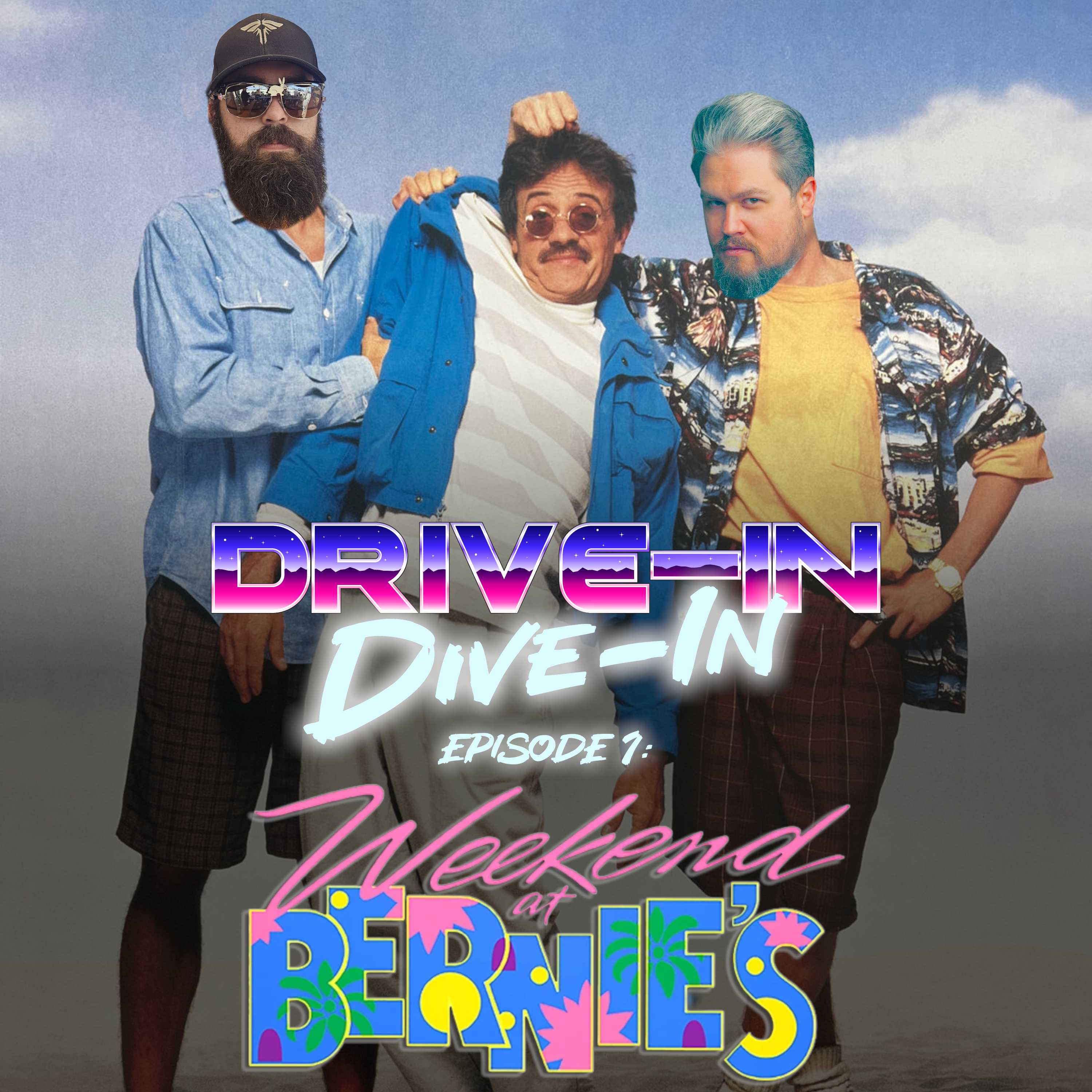
You know, we're both husbands, we both, you know, work in creative stuff, which takes up a lot of our time. And then I have three and a half year old son. So, you know, life fires away, but sometimes death keeps going too. And that's what we're here to talk about today with weekend at Bernie's 1 and 2, which was my pick for this episode because I feel like they are very underrated and underappreciated. And it sounds like maybe you agree after having seen them.
[00:02:13] Speaker B: Yeah, I found it really interesting to use these in a comparative analysis because the second one so radically adds to obviously weakened At Bernie's at a high level.
He's dead. Right. So how do you have a sequel where the titular character that is dead. He's fucking dead. He's dead. And you know we can talk about it more when we get to the second one or we can start off right, right away with it. But just the introduction of these supernatural elements that are so radically far afield from the first film.
I believe you said that you prefer the second film, and I can see why, if that's the case.
[00:02:51] Speaker A: Yes, yeah, I definitely do. Two is my preference because really embraces the idea and goes whole hog. It really goes all in. One is great, and I do want to start with one because it's the reason there's a sequel. It didn't make a ton of money in box office. It essentially broke even. So, like, it made double its production cost, which as you and I know, means it covered its advertising costs. Like, it basically broke even. Right. It was considered not necessarily a failure, but just kind of like, okay, we did that. And then it hit the video market and the shelves at Blockbuster and Video King. And people kept talking about it, people kept watching it, it gained cult status. And four years later they made a sequel about a corpse, which is in and of itself hilarious. But yeah, it's a really interesting production in a lot of ways. Right. Like, Jonathan Silverman kind of launched his career off of this. He'd been in some small stuff, he was doing Broadway, but this was really like. They kind of were like, he. Let's get this guy that we're hearing about on Broadway to come in and read for this. And he ended up kind of knocking it out of the park. McCarthy was the big name. He's Brat Pack alum. He had the pedigree. He was gonna be the name that drew people in. And Ted Khotchev hadn't done a lot director wise. That was in this bag. Right.
First Blood, Rambo, Wake and Freight.
[00:04:23] Speaker B: Right.
Some pretty radically different. Yeah, I'm just scrolling through the IMDb here. I mean, if we're talking about the CA, I think Mr. Lomax himself, Terry Kaiser, probably had the most incredible performance.
In a weird way. Some of the physical gags and the physical comedy that he subjected himself to was pretty incredible, in my opinion.
[00:04:44] Speaker A: Yeah, absolutely. He apparently cracked three ribs on production and got a fracture in one of his vertebra at one point. And same with his stunt person. They both went through significant abuse, which is crazy. I don't have to take this abuse.
[00:05:00] Speaker B: I quit.
[00:05:01] Speaker A: I mean, he really. He 100% makes the movie, especially in two.
But hearing him talk about it, the mustache was a whim idea he had going into the initial read.
And then production was like, you need to keep that. And the smirk, the Bernie smirk when he leans back. That was also just a Kaiser in the moment thing. And that's what made the movie. Right. You never feel bad about the things that are happening to this corpse because he's having a great time.
[00:05:30] Speaker B: Yeah, well. And also, this is the second film I never realized, like, the. Bernie was a dance from the film, or I assume. I mean, it looks the same, so. Yep.
[00:05:48] Speaker A: Can you, Bernie Lane?
[00:05:50] Speaker B: Can you, Bernie Lane? Can you, Bernie Lane? Can you burn Elaine? Can you burn Elaine? I can burn Elaine I can, I can burn Elaine I can burn Elaine Watch me burn Elaine that was just a ubiquitous part of life that I was familiar with, you know, through college, etc. I don't know if my peers knew it was from the film because, you know, it came out, like, the year me and most of my peers at college would have been born or, you know, around that era, so.
Doesn't necessarily mean that everyone would have seen it. I hadn't.
[00:06:19] Speaker A: Right.
[00:06:20] Speaker B: Yeah.
[00:06:20] Speaker A: But it was absolutely ubiquitous in culture. And that came about in large part because Weekend at Bernie's 2 specifically was played on cable constantly. So if you didn't have premium channels, like, it was always on tv, you always saw it on Comedy Central or, you know, Fox or something. And so it just kind of became this ubiquitous idea, even if you never sat down and watched the whole movie. That voodoo walk of Bernie just kind of, you know, dead man shuffling through, you know, the Caribbean is just so iconic and hilarious, you know, And I think that speaks to how good the premise is, Right? Like, the poster itself is so iconic. And speaking as somebody that works in marketing, like, that imagery is so clutch and so key. And, like, even the slogans, right, he's the life of the party. There's only one catch. He's dead. Right. But you can dress up as the poster, you know, Lomax and the two guys.
[00:07:25] Speaker B: And everyone knows what that is.
[00:07:26] Speaker A: Everyone. Even if they've never seen it, everyone knows it. Right. It is just a cultural staple. And so from just a zeitgeist in a cultural perspective, there's a lot of value and merit to this series. But, you know, I really think that there's also more.
I don't want to.
I'm going to say artistry. I don't necessarily want to say artistry, but I do. Like, I think that this is a really misunderstood series of movies, especially the second one. And before I kind of, like, get into all my film nerdiness, like, you coming from a more literary standpoint, you know, there is Especially in the first one, a lot of commentary about, like, the Reagan era and the dehumanization of people at that time.
[00:08:14] Speaker B: Yeah, I mean, I saw it largely as.
It really felt like the film itself was like the story of two guys losing any sense of morality that they had over the course of two movies, in any case. But going back to the Reagan era, obviously there were a lot of allusions to drug use and that involved within the more corrupted elements. Right. The Mafia or the gang elements. Tony Bennett of the mafia, Mr. Lomax himself.
There's not only marijuana use, but a lot of allusions to cocaine as well. Never direct, but it's, you know, there's the telltale hallmarks, never in the context of the protagonists, although I do think they verbally espouse marijuana favorably, if I'm not mistaken, at least in the first film. So, you know, there's that, obviously from the Reagan era, but also just this idea of, like, these are two guys that are trying to. They think they've hit their big break, like the American dream sort of situation where, oh, we're saving the company money. It's all about the company. We're company men. We're coming in on the weekends. We're telling the boss, we think that we are going to be rewarded for this.
Instead, the boss only made it through this form of corruption, and then now they're going to be punished for what it should be, their big break, their American dream realized.
[00:09:36] Speaker A: Right. And then on the. On the other side of that, on the island itself, right, you have debauchery and, you know, drug use and partying of these obscenely wealthy people. Meanwhile, these guys are, like, getting stuck in the tar on their roof in New York, Right? And they're not. They're not schlubs. They're accountants at what we presume is a pretty significant, you know, life insurance company that clearly makes a lot of money. Right.
And it's just. It's that dichotomy and the realization people were coming to that trickle down doesn't work. Right.
[00:10:11] Speaker B: I was going to say it also set against just how poorly they treat their health staff across the island, as well as the life insurance company, which is a funny company for the concept of the movie, in any case.
[00:10:25] Speaker A: Absolutely, absolutely. Yeah. And, you know, drug use, especially in the first one, significantly more crux than, like, you really think I do it for the drugs?
I do it just don't feel a blast.
Cause you're like, yeah, you know, you think about Bernie, you think about the gags, but like, you know, he was. His death was framed as an od. There is one of my favorite subtle, like Kaiser's performance in general, despite the over the top physical humor is incredibly subtle in really smart ways. Like, we already talked about the Bernie smirk, but like, when he gets to the island for the first time and he's walking across the dock from his boat, he just takes his hand out of his pocket and does a tiny little key bump and just keeps going.
Like, it's so. Like, there was no need for it. Like, if you're not paying attention, you don't see it, but it's just like that's how addicted he was and presumably why he owes the mob so much money. Right. Like, which, like, not getting into, obviously,
[00:11:32] Speaker B: we find in the second movie he just put in the. In the ocean, apparently.
[00:11:36] Speaker A: Put it in the ocean. Yeah, exactly. So apparently he was. He was owed people a ton of money for coke that instead of paying them, he. He threw into the ocean.
[00:11:46] Speaker B: Like, I mean, there may be some element of he was developing an escape plan or something like that. I could. I could believe that for sure.
[00:11:53] Speaker A: Yeah, yeah, absolutely. I mean, if I owed, you know, millions of dollars to the mob for my coke habit, I would take the cash and go to Colombia as well. Right. Like, you know, why not?
[00:12:02] Speaker B: Seems like a pretty nice place.
[00:12:04] Speaker A: Yeah.
Diving in a little more on the. The film side, something really kind of struck me and strikes me the more I watch this is it really stands as kind of one of the last seminal, like, slapstick physical comedies. Right? Until you get Jim Carre in 96 with. Or was it 94 with Ace Ventura, the Mask and Dumb and Dumber. Right. Like, that was kind of a resurgence of that. And you've got, you know, you had it happening on TV with Living Color, homie don't play that. And, you know, things of that nature. But again, Jim Carrey was involved in that too.
But as far as cinema goes, you didn't see that for a while, but for a long time that was humor. And there's a lot of the gags and the tumbles in this that feel very reminiscent of Buster Keaton.
And I say that as a massive compliment. I think that some of the physical humor here is some of the funniest out there. You know, some of those falls are just hilarious.
[00:13:15] Speaker B: Oh, hi, Bernie.
[00:13:17] Speaker A: See you at the party tonight.
[00:13:19] Speaker B: What I'm. I'm just kind of looking up comedies, 90s versus, like 2000s versus 2000s, and seeing that decline in the physical comedy, which is my Wife and I.
Where.
Your cousin and I, we were talking about this the other day about how there's very few just comedy movies anymore. It's got to be like an action comedy. It's got to be like a Marvel movie or something. And comedy is a, you know, subsidiary or secondary.
But now, you know, the. The new Naked Gun just came wondering if we're going to see kind of, you know, that ebb and flow back in this direction.
[00:13:54] Speaker A: Yeah. And I mean, you know, we'd be ripe for an absolutely absurd third Weekend at Bernie's, in my opinion.
I mean, makes no sense whatsoever. But did the second? Who knows? Not really.
[00:14:06] Speaker B: I mean, Kaiser's still working. He was in an Ice 9 Kills music video.
[00:14:11] Speaker A: Absolutely, absolutely. But, yeah, I mean, absurdist humor was certainly, like, really big back then with Airplane, Naked Guns, stuff like that. And it is starting to come back as we are in, like, the Reagan 2.0 era, as it were. Right. We're also leaning back into that a little more. But I think for a long time, everything needed to get more grounded in Hollywood in the 80s comedies and even other stuff. But there was just this fantastical, fanciful element where everything still felt a little like we were telling fairy tales. I want the fairy tale.
[00:14:45] Speaker B: Yeah, I can certainly see that. I think that, you know, this is.
Especially as you get into the second film, there's that sort of fantastical fairy tale element. You bring in the voodoo, and then now he's like, you know, up and back alive. And it's the next stage of this after we've already kind of like, deconstructed the American dream. Then they're like, okay, now we're completely within the realm of corruption. How do we play around with that? One issue I have with that is I really feel like there's not a lot of great character development.
Richard. I really felt like in the first and probably both in the first film, I don't think he has much character development at all.
He gets involved in this random romance where he just kind of gets rewarded for not growing. And in the second one, if anything, he just kind of becomes a worse person.
I think that Larry actually has character growth in the first film where you see him grow from simply a dog chasing cars, as it were, to actually being thoughtful, still chasing the car to a point, but then deciding to make more ethical decisions to some extent by the end.
And then that's all thrown away in the second one. And then he just becomes like a funny kind of corrupt guy again. I don't know if you have any thoughts on that?
[00:15:57] Speaker A: Yeah, no, I think that's really accurate and astute. Richard's romance with Gwen is absurd. There's no reason she should end up with him. Right? Like, he makes all the wrong moves, but somehow it works anyway.
[00:16:11] Speaker B: Right?
[00:16:12] Speaker A: Like up and into parading around a corpse, like, hey, whatever. At the end of the day, we love each other and yay. And then the second movie, no mention, she's gone. Right. Like, did it.
[00:16:26] Speaker B: I mean, that was never built to last, obviously. Of course.
[00:16:28] Speaker A: Of course. But we just. We've moved on completely. Right. And then with Larry. Yeah, Larry is certainly the deeper character, right? He's the one that thrusts them into it, but kind of like Icarus, too close to the sun, like, kind of pulls back as opposed to crashing to the earth.
And, you know, that brush with death kind of shakes him a little bit in the first one, I think if they put that much thought into it.
And in the second, he's primarily just the driver for the humor and kind of the foil to Richard's more straight man esque. But what is interesting is there's a moment, a brief moment in two, where Larry exposes himself as a virgin.
[00:17:10] Speaker B: But I need the blood of a virgin.
Goodbye, I'm dead.
You just take the blood, doc.
[00:17:21] Speaker A: Which makes a lot of sense because he's this hound constantly, like, talking about and going after women and yet never even coming close to sealing the deal in any of the movies.
And, you know, there's the question of, like, is he queer coded or is it just the hungry dog never gets fed? Right.
[00:17:39] Speaker B: Okay. Oh, wait right here.
[00:17:41] Speaker A: I should have known.
He's too aggressive and will never succeed at what he's trying to do. The lecherous man doesn't succeed, even though, like, there's plenty of lechery in these movies nonetheless.
[00:17:54] Speaker B: Well, it's funny because, as you said, there's plenty of lechery, but it seems like all of these characters are, for whatever reason, already on that in Club or whatever it is. They're already kind of like descended into that debaucherous level. Just like we see retro Richard kind of descend in the first film. Whereas Larry never truly does cross that line. I think he's always kind of, at the very least, nihilistic, but maybe not corrupted. He simply sees the world through his own lens and doesn't care as much. Whereas Richard goes from being moral to immoral or amoral at the very least. It's like that nihilism within Larry that actually creates this arc where he.
Maybe he's still a nihilist. But now. Now he no longer wants to do this thing that he wanted to do earlier.
[00:18:44] Speaker A: Yeah, for sure. Which, like, I think makes him a very interesting character. You know, even, like, at the end when they get the money, they don't want to, like, go back to New York and, like, take it on and keep making money. They're like, let's go somewhere where we can live off this the rest of our lives. Because, like, I did the conversion and, like, at the end of the day, they wind up with, like, the equivalent of like, $2.3 million model.
[00:19:09] Speaker B: I was about to say it's not that much. It's really.
[00:19:13] Speaker A: It's really not, you know, but it sounded like so much money in the 80s.
[00:19:17] Speaker B: Yeah. I mean, I suppose if you're living frugally in a South American nation or something, you might be able to make that work.
I say frugally, but frugally by the standards of what you would think of as rich. Like Google. Live a normal life.
[00:19:34] Speaker A: Yeah, exactly.
[00:19:36] Speaker B: That doesn't seem to be what they're implying is their idea. So, you know, at the end of the second film, you know, I watch it with my sister. I turned her. Like, they're going to be out of money in like, a year, two years, if they keep living like this.
[00:19:49] Speaker A: Yeah. Oh, yeah. 100% right. They bought you.
[00:19:53] Speaker B: Oh, sorry.
[00:19:54] Speaker A: No, go ahead.
[00:19:55] Speaker B: I was going to say that. Which is how you get into that death spiral that Lomax was in. Right?
[00:20:03] Speaker A: Yeah. Is Weekend at Bernie's three Richard and Larry getting their own medicine?
[00:20:10] Speaker B: Oh, yeah. They're puppeted. Yeah.
I truly have no idea if that would make a good. What would make a good story for a third? I feel like you have to have Lomax back somehow. You do. I don't know how that's the case, but.
[00:20:26] Speaker A: Yeah, absolutely. I think we're kind of touching on a lot of things that I wanted to get into. We've talked a little bit about how absurdist and physical the comedies are, but there's almost a cartoonish element, like a Looney Tunes cartoon element to the humor, especially in the second one, which I think was the right move. Right. Leaning more into that. Just, like, really embrace the humor. But that's another thing that was very true to the 80s that we don't see as much now. You can look at a movie like Ghoulies. Now. The Ghoulies are about to learn what higher education is all about.
Brewskies, Ghoulies. Three Ghoulies. Go to college, which is just like these slapstick, almost child, like, cartoony humor moments. And then like topless girls and you know, other just like lecherous, absurdist, you know, people getting, you know, mauled by the ghoulies and things of that nature. Right. It's just.
It was such a weird time. I mean, it's like boomer humor in pervasive. Right. Like, that was kind of their thing. Like, their sensibilities of humor never grew past that. So even in a mature format, like, you know, I mean, I say mature, but I mean, like, you know, gross aesthetic, like meatballs or ghoulies, you still have the writers falling back to that cartoonish humor because that's what the people who were writing that kind of movie knew at the time.
[00:22:11] Speaker B: Sure. I would call it sophomoric. Like it never really gets past that middle high school level of kind of comedy.
[00:22:19] Speaker A: Yeah. And I think, you know, weeknd at Bernie's 1 and 2 certainly come above that in large part because of the Buster Keaton esque physical comedy.
And, you know, honestly, just the chops and the performances of the characters.
And it doesn't, you know, I mean, we've got no nudity until the second
[00:22:38] Speaker B: one, which seemed completely unnecessary. I assume. It was for ratings.
[00:22:41] Speaker A: For sure. For sure.
[00:22:44] Speaker B: It was like the end of the film and they're like, we must show breasts.
Why?
[00:22:50] Speaker A: Yeah, yeah, for sure. Like, you know, they wanted an R rating.
[00:22:53] Speaker B: I don't know.
[00:22:53] Speaker A: I think that must have been. Right. They're like, it's the 80s, we gotta show boobs.
You know, Larry and Richard were sleaze bags, but the movie itself didn't really praise or elevate that sleaziness. Whereas there is a little bit in the second one where it's just ingrained a little more.
[00:23:12] Speaker B: Sure.
[00:23:12] Speaker A: But I think overall it's easy to criticize the absurdity and, you know, the faults or things that don't align with our current sensibilities with these movies.
And I think, you know, more and more people are revisiting them and appreciating them a bit more for what they are. Whereas when it came out, and even, you know, I think a lot of more cinephile leaning people are still going to look at it and try and judge it within the wider context of the cinema landscape. Right. Essentially, oh, this is so low brow. Right. This is such a dumb premise. I can't possibly take this seriously. Rather than saying, all right, this is an absurdist premise.
What are they saying through it? And where's the value in it. And was there anything of value in the car?
[00:24:11] Speaker B: So going back to the cartoonishness and then kind of some of the abrasiveness of that absurdism.
One thing that I did notice, especially in the first film, to some extent the second, but especially in the first, was the costuming and how wild it was in certain ways.
I think that Larry's costumes were always these, like, really interesting, like, patterns. And I mean, part of it was. It was the 90s, but it was still notable, in my opinion, the ways in which they dressed and just fun fact that I looked it up. The costuming supervisor was Richard Dick Butts.
Gotta love his parents for that name. Who also worked on, like, some TNG episodes and things like that.
And I was just trying to look up if he was in the second film as well. But that's neither here, here nor there.
I just felt like, as you even said, you can. You can dress up as. As the trio at a costume party and anyone will know who you are because there's such. Especially with Lomax. But, you know, the. The three together, like, such this strong aesthetic. Or the second one, the. The windbreaker suit. Why did Richard even have that? I can't imagine him wearing it much less. But, you know, Lomax. In any case, I don't know if you. If you had any thoughts on the costuming, but I found it notable and very interesting. Like I said, I especially love Larry's fits.
[00:25:33] Speaker A: Yeah, no, I think, you know, they're absolutely iconic and, like, just really encapsulated the vibes of the era. Right.
The power suits when they're in New York. And then, you know, I think it also really does a great job of capturing and pushing, like, the state of the people. Right. When they're in the office, they're, you know, stuffed up. But when Larry and Richard are on the roof getting covered in tar, they are in their schlubby New Yorker summer attire, which is pretty similar to what they wear to the island because they are not getting paid well by their company. Right.
[00:26:15] Speaker B: I mean, speaking of costume changes, the hitman has some of the strangest costumes.
He's got like the over the top Mariner. Nobody would ever dress like that. He's got the priest. For some reason, when you first see him, he's like a little more just like kind of 80s coke dealer.
I don't know what, if anything, they were trying to communicate with him, but he was all over the place.
[00:26:39] Speaker A: Yeah, yeah, absolutely. It's a good question.
[00:26:43] Speaker B: I don't know that there's anything to it. Just for some reason that. That stood out to me. You know, all of the. All of the guests that just kind of went around on the floating parties, they were all dressed pretty much the same, which. That makes sense. Gwyn herself, her costumes were actually probably some of the least complex in the film, which was interesting because she's supposed to be the sex object. Terrible analysis because I'm not saying anything with it, but of note to me at least.
[00:27:08] Speaker A: Yeah, no, absolutely notable. Right. And I think you're right. The homogeny of the partygoers is really key in the era. I like to call it the American Psycho sensibilities. I hate that job. Anyway, I see why you just don't quit.
Because I want to fit in. Patrick Bateman as a character was kind of like leaning into kind of one of the main things that Brett Sinelis was saying in the book. Right. The assimilation and the similarity, like showing you are part of the in crowd. And I think, you know, speaking to anything of Larry and Richard's costumes, it's that they don't look like the partygoers. Right. They are not in like the full on preppy stuff. We're a little too removed from 80s fashion for me to be able to say, well, they're not wearing, you know, the, like.
Ralph Lauren or what. I don't remember what those fits looked like specifically. But you compare and contrast them in that party and they stick out because they're not part of the in crowd. They're not welcome there. Right. They're not supposed to be there. And so it kind of, you know, sets them apart in an instruction.
[00:28:25] Speaker B: Sure. Although it does seem that nobody really seems to mind them there, probably because even in death Bernie's, you know, presence is so overshadowing that even while dead, he commands like, the attention of basically everyone in the room.
[00:28:41] Speaker A: Yeah, exactly. Exactly.
[00:28:43] Speaker B: And they still don't notice that he's dead.
Right.
[00:28:45] Speaker A: Yeah, yeah. He's the ultimate party guy. That he doesn't even have to say anything or breathe for people to be happy that he's there. Right. Just made me think of the waving gag, which is again, another key aspect of the culture around this movie. Everyone knows the shot of him leaning back in the recliner and the rope making his hand wave at the girl as she walks by. He doesn't even have to speak. And anybody would be able to tell that his hand's being lifted up by a rope. But the woman is so enamored that Bernie's there that she doesn't Even think about or notice the fact that it's a rope lifting up his hand.
[00:29:21] Speaker B: Right.
[00:29:22] Speaker A: And that whole scene was actually. Well, it was a mix of McCarthy's idea and then somebody in the crew. So, like, McCarthy apparently was a big. What equated to a board game nerd in the 80s, which, like, God, what a miserable existence. He brought Monopoly with him.
[00:29:39] Speaker B: They were playing Monopoly, which, you know, I'm not a hater, but if I'm picking a board game nerd, that's on the list.
[00:29:46] Speaker A: Yeah, absolutely right. But he. Yeah, he brought it with him and he was playing it all the time. And he's like, hey, why don't we have one where I'm playing Monopoly with Bernie and I'm cheating him even though he's dead and I'm controlling, like, I'm still cheating to win. And then somebody else on crew is like, oh, we should tie a rope to his hand and make him. To make him wave. Like, so just a lot of this stuff, you know, was really freestyled on the set. And as much as coke was instrumental in the narrative, I would be shocked if it wasn't also instrumental in the production. Sure.
[00:30:18] Speaker B: I mean, this is a film that came out in the 80s.
I don't know if you've seen the studio yet. The old school Hollywood buffets.
[00:30:26] Speaker A: You got an old school Hollywood buffet,
[00:30:29] Speaker B: Should you choose to indulge, you know what I mean?
[00:30:32] Speaker A: Totally. Yeah.
[00:30:33] Speaker B: Cool. It's funny because they're kind of tearing down or giving commentary on a culture that they're likely engaged in to some extent. Not necessarily that these people are all wealthy, but they are rubbing arms with Hollywood elite and that sort of thing.
[00:30:48] Speaker A: Yeah.
[00:30:48] Speaker B: Funnily enough, I just saw on IMDb that there is a finished script for a third film that you can find online.
I don't. I haven't had obviously any time to look at it, but that could be fun for like a bonus episode or something. If you want to do it, do a read.
[00:31:07] Speaker A: That would be great. Yeah, hunt it down, read it, give our thoughts. We should definitely do that.
[00:31:11] Speaker B: Act one.
Oh, no. Larry is broken down drug addicted show of his former self.
Richard is a suburban dad who dead in career. Oh my God.
[00:31:25] Speaker A: Amazing.
[00:31:26] Speaker B: It looks interesting.
[00:31:27] Speaker A: Yeah, yeah, that sounds great. Let's definitely. Let's hunt it down. Do that as a bonus episode because that will be super fun. You know, we're talking about Cornerstones of the 80s and I think a lot of younger film watching folks out there may not understand the links to which that was just part of society a lot. The same way that weed is now, right? People think of it as being a health benefit, and it's just kind of there.
That was, especially in the late 70s, early 80s, that was coke. And coke was just starting to come in out of that fad and be seen as dangerous in the same way that Reaganomics was losing its luster and were post Black Monday in this movie and kind of hitting into that cynicism, right? And this movie hits a lot of the tropes of the 80s that were just ubiquitous. It's almost like, you know, for better or worse, now every movie needs to feel super grounded for the audience to buy in, right? It needs to be real and plausible. In the 80s, they're just like, all right, let's spin the wheel on the list of tropes, all right, we've got organize, right? We've got cocaine. We've got evil rich people because we're all mad about the economy now.
Main characters are dudes trying to get laid. And New York sucks in the beaches paradise. All right, let's go.
These 80s comedies, they're all so coked
[00:33:08] Speaker B: up that just anything goes.
[00:33:09] Speaker A: If you even begin to suggest that Encino man, is there anything other than a cinematic masterpiece, I'm firing you.
[00:33:15] Speaker B: We need as many shots of, like, trash bags piled up on the streets of New York as possible. If you were to believe these films, you would think that they were just like, swimming in trash. Which to an extent, I know that there was. That there was, you know, issues with that sort of thing. Still. Still are, but it is a bit of a caricature.
[00:33:34] Speaker A: Yeah, absolutely.
[00:33:35] Speaker B: Yeah. It's interesting. I mean, you've even mentioned that we're kind of entering the Reagan 2.0 era.
This is probably regional, but I would argue that over the past five, probably five plus years, coke has kind of made a comeback within certain echelons of society. And like I said, probably regionally to an extent. And I haven't looked at any data on this, but it's just. Just something that I'm hearing out a lot more about lately.
And probably, you know, just that thing that just happened off the coast of what Venezuela related to it, using it as a scapegoat at the very least. Not that this. That's what this podcast is about, but just.
[00:34:17] Speaker A: Right.
[00:34:18] Speaker B: Finding. Finding comparisons there.
[00:34:21] Speaker A: Yeah, no, absolutely. And, you know, I'd say it's been closer to a decade, certainly since the first Trump era. And I don't. I'm not suggesting it's tied to that But I just know, like, I recall pre pandemic hanging out with some people that I knew pretty well, and one of them just being like telling a story, da, da da. And I did a bump and ba da da, da da. And just like, it was just a part of the narrative and a normal thing to say. And I was just like, what?
Like.
And like having, you know, other friends who are more in the party scene being like, yeah, know, that's just. It's part of it. Like, you have no idea the number of people that casually do cocaine now. And it's just. Yeah, it's. It's wild. Yeah. Part of why, maybe why Weekend at Bernie's resonates so well with us is that it is feeling more and more unfortunately familiar in some ways as far as the things it had to say about society and what was going on.
[00:35:19] Speaker B: Well, it also kind of rewards that corruption and decay and nihilism, like we were saying, which is not like an excellent message, but I definitely don't feel like morality is being well rewarded these past several years, if I'm being honest. I just mean at a global level.
I know in personal life it can be very validating, but just the everything of it all.
[00:35:44] Speaker A: Oh, for sure, for sure. Yeah.
This isn't a deconstructionist podcast, but yeah, it's very much like, well, okay, I guess maybe nothing does matter.
[00:35:55] Speaker B: Oh, no.
Are we nightless now after watching weekend at Bernie's 1 and 2?
[00:36:02] Speaker A: I mean, not from that alone. More watching the news. But, you know, one thing that I wanted to dive into a little bit, and I'm gonna get like a little film nerdy. And I'm going to make some statements that I only found one person, say, in an article that I had to find via Wayback Machine a number of years ago.
[00:36:25] Speaker B: It's an older codzer, but it checks out.
[00:36:28] Speaker A: Obviously. Weekend at Bernie's is just quintessential packaged like 80s. If you want 80s vibes and nostalgia, like, sit down and watch it. And it really, as we talked about, leans into those late 80s comedic sensibilities. Despite all of that, it is very much a by the numbers classic screwball comedy of errors, like classic Hollywood, like 1950s. Like, you've got two bumbling idiot main characters who are failing their way through a storyline with absurdist physical comedy and really great quippy comedy. Right, sure.
[00:37:03] Speaker B: All this could be yours, lair, if
[00:37:04] Speaker A: you set your goals and work hard.
[00:37:06] Speaker B: My old man worked hard. All they did was give him more work.
[00:37:09] Speaker A: I haven't seen the original scripts for the movie. I have not heard anyone from the cast or crew ever say or suggest this, but my hot take is that I am fairly convinced that this started off as a loose remake of Some Like It Hot, which have you ever seen.
[00:37:25] Speaker B: Interesting. I have seen it. It's been some time.
Can you, can you give me a quick recap?
[00:37:31] Speaker A: Yeah. So in Some Like It Hot, Tony and Jack are these odd couple esque, you know, down on their like. Guys, say, Joe, tonight's the night, isn't it?
[00:37:41] Speaker B: I'll say.
[00:37:41] Speaker A: What?
[00:37:42] Speaker B: No, tonight's the night we get paid.
[00:37:43] Speaker A: That's good. Why? Oh, settling among my back teeth. I gotta see a dentist tomorrow.
[00:37:48] Speaker B: Dennis, we've been out of work for four months. You want to blow your first week's
[00:37:50] Speaker A: pay on your teeth? They stumble on a crime, which in Some Like it hot is the St. Valentine's Day Massacre. That puts them in the crosshairs of the mob, makes them flee. So in Some Like It Hot, they're musicians, they dress as women, join an all women's band that is going down to Florida, perform with the band to hide from the mob and keep up their appearances and the facade of them being these female members of the band. Meanwhile, they also occasionally are themselves. And you know, one of them falls in love with Sugar Cane played by Marilyn Monroe. And kind of, you know, there's that whole thing. There's a big performance and kind of culmination where the mob makes it down to Florida. They narrowly escape through some silliness, confess everything to the loves of their lives. I won't give away one of the end jokes there. You should definitely rewatch it.
And they ride off into the sunset, happily ever after with the mob behind them, comparing the beats of them. So you've got the two odd couplesque down on their lick. Dudes stumbling on a crime, putting them in trouble with the mob, they flee this city. So it was New York and Chicago. It was Chicago and Some Like It Hot New York. And in this to a coastal vacation hotspot put on a ruse in order to blend in and hide from their inept would be assassins. They stumbled through moments of physical and situational comedy driven by the guy's chosen method of subterfuge. The more likable of two guys falls for the hot girl that they know because of their day job, hiding the truth of the situation from her in hilarious ways, pretending to be rich.
[00:39:29] Speaker B: I, I just got this motorboat. It's an experimental model. There's a man in his underwear in your kitchen. He's my.
[00:39:39] Speaker A: My butler.
[00:39:40] Speaker B: But you have a butler?
[00:39:42] Speaker A: Yeah, yeah, yeah, yeah.
[00:39:43] Speaker B: Don't get him started. He'll go away if he's just being quiet.
[00:39:46] Speaker A: Eventually winning over the woman. Despite their deceit, the guys shed their subterfuge in the finale, exposing the criminals to the police in the process, and they get away. And this original name for Weekend at Bernie's on the original script was Hot and Cold. And the first line of the chorus in the movie's theme song is Some Like It Hot.
[00:40:15] Speaker B: Oh, that's interesting.
I mean, you've sold me. I'm hardly an expert, but. No, this makes a lot of sense. I mean, obviously there's. There's.
There's like, textural differences using a corpse instead of a. A woman's outfit for. For your disguise, but.
And also, I would argue that Larry's more likable, but that's just me.
[00:40:40] Speaker A: He was supposed to be the more likable. He's certainly the cat.
[00:40:43] Speaker B: But that's interesting. The film was kind of coming back to me a bit, and I was kind of glancing at the synopsis while you. While you were speaking, but it seems like a very plausible sort of thing, especially with the theme song tie in.
I would have to listen to it again, but that's cool. I'd be curious if there are any shared shots doing a shot breakdown or anything like that. That.
[00:41:04] Speaker A: Yeah, that is definitely a good question and not something I got that into. I was just, like, kind of sitting, rewatching it. I caught the chorus line. I saw the original name of the screenplay, and I was like, wait a minute. And I started really thinking about the beats. And like, some Like It Hot is probably my favorite, second favorite comedy of all time. First being Ghostbusters, kind of the seminal screwball comedy will be timeless forever. You could watch that movie, you know, in.
You can have your AI robot assistant pull up that movie for you in 30 years, and it'll still be funny, right?
But, yeah, there's a lot of, you know, even if it wasn't an intentional remake, there's enough familiarity and similarity that it's clearly like the original script was built on that pedigree. And, you know, I know that the screenwriter Robert Klein, who ended up directing the second one, struggled a bit with bringing this idea to life. I heard a number of people involved with the movie describe the initial sale and swing into production of, yeah, the premise is great, but the script sucks.
So there was a lot of rewriting. And even if it wasn't intentionally a remake, I think there Was a lot of like, maybe studio hand and input of like, hey, this is what worked in the past. This is what worked in the past. Right. And still writing on that format, that classic screwball format, which some like it hot perfected. So even if it wasn't, wasn't intentional, I think it came about as a result of that.
[00:42:33] Speaker B: Well, and as you mentioned, like the homage to Buster Keaton style comedy as well, a lot of classical tropes here, right?
[00:42:40] Speaker A: Yeah, absolutely. And then you have obviously the Odd Couple kind of in these main characters, which was another classic comedy. And then there's the inspiration from Hitchcock's the Trouble with Harry, which is a movie about people dealing with a corpse and the trouble that ensues with finding a corpse in their house.
[00:43:00] Speaker B: Interesting.
[00:43:01] Speaker A: Yeah. So like the. I don't think Weekend at Bernie's has any pretense or ever had any pretense of being great cinema. Right.
But it pulled from all time greats and still built itself on a foundation of the concepts and premises and tropes of some of the best.
[00:43:24] Speaker B: Well, in that vein, then how do you see the evolution between, you know, this, this first film that kind of embodied all of these great classical tropes and how that evolved into the second film, which even, you know, we started off by saying, I think we both preferred it in many ways.
Is it that they had found their footing by like adding some of this more not only supernatural, but like kind of just crazier narrative progressions where they just threw all of that original grounding that they were getting potentially from these older, more classical comedy tropes out the window and kind of like taking those, turning them up to 11.
[00:44:09] Speaker A: Yeah, I think that was really it. Right. Like, I mean, how do you even approach a sequel to a movie about parading around a corpse? Right? Like the corpse parade itself around. Yeah, 100% right. But like, you have the absurdity of the premise itself is so, so out there and unbelievable that you have to go to 11. You gotta say fuck it, and throw all pretense and all like, sensibilities of common, acceptable cinematic approach out the window. And I think while Clane had apparently struggled with really forming the script for the original, I think having him directing and writing the second is what in a lot of ways allowed it to be so much better. Not because he's this great auteur, because if you look at the rest of his filmography, it's not, but because it was just such a batshit idea that you just let the batshit crazy guy that Came up with the idea, helm it, and you just lean all the way into the comic and cartoonish sensibilities, right? You're like, this is live action Looney Tunes. What do they do in Bugs Bunny cartoons? Cool. We're gonna do that here.
[00:45:27] Speaker B: Right?
[00:45:28] Speaker A: Like, I mean, that. That whole sequence where they're doing the ritual in the public bathroom and they turn on the music and then they turn off the music.
Like, I mean that in.
[00:45:40] Speaker B: And like, that it takes them, like, four tries. It's not even the, you know, everything comes in threes and narrative. Right. They. I think they do it four times. Like, they just.
One too many times. Like, guys, the audience knows what's going on.
Why can you not figure this out?
[00:45:56] Speaker A: And that's kind of like why it gets so funny to me is like, it's just, you know, we are fully in on the absurdity. And the rest of, like, the actual cast of characters are like, what is happening? Like, they are taking such an extra amount of time to wrap their heads around the absurdity of what we bought into from moment one.
That, like, they are kind of that outlet of catharsis of humor for us in the situation. And, like.
Yeah. That sequence in and of itself just feels straight out of a Bugs Bunny cartoon. Right.
[00:46:35] Speaker B: Well, it's also. I don't.
Speaking of those two characters, I can't recall their names right now. They don't get a ton of screen time. But they also, like. I feel like they're treated very poorly in the movie. I don't understand what they did wrong. Like, they get punished by being turned into goats at the end. They're, like, always being foiled. And, like, these guys were just in the wrong place, as far as I could tell. I don't think that they were particularly bad guys.
[00:47:00] Speaker A: Yeah. I mean, well, they were.
They were working for the mob. Right.
[00:47:05] Speaker B: I think. I don't know. I think they may have said that, but I don't know what they were doing.
[00:47:09] Speaker A: Yeah, I think they were just. Their job was just to, like, find the money for the mob. So, like.
Yeah, yeah. No, I. I think you're absolutely right that they didn't necessarily deserve their fate. Especially being, like, the worst fate of, you know, everyone in the movie. I mean, you and I are two white guys, so I feel like there's. There's an element to it that we're not really the right people to speak to.
[00:47:34] Speaker B: Sure.
[00:47:35] Speaker A: But, you know, there is just kind of.
[00:47:37] Speaker B: Be careful there, buddy.
[00:47:38] Speaker A: I know. Yeah. Well, I'm kidding.
[00:47:40] Speaker B: I'm kidding.
[00:47:41] Speaker A: Point Being like the early. There's a couple of aspects, right? There's the early 90s morality, like that back end of Reaganism shifting into the Bush era. Or actually, no, shifting out of the Bush era and into the Clinton era. And so you have the Puritans and the conservative right really having built from Nixon up to the 90s, and the evangelical movement really starting to take hold and having a villain like Clinton. I say villain in quotes for them, not for me. Clinton is not great, but, you know, whatever.
He was the president, but for them he was terrible. Right. And so this kind of morality was really, I think, starting to be a bit more prevalent in cinema and tv again, similar to what we're seeing now with Gen Z and, like, just kind of this puritanical shift.
So, like.
And obviously Richard and Larry are lecherous in this, but they needed a scapegoat for the evils of the bad guys. Right? Like, sure.
[00:48:55] Speaker B: I mean, you get that a bit with the investigator as well, but not. Not as much, I think.
[00:48:59] Speaker A: Yeah, yeah, exactly.
You know, and some of it is just like, let's be funny. And some of it is like, let's lean into voodoo tropes that we don't understand because we're a production run by white people and, like.
[00:49:14] Speaker B: And do no research whatsoever.
[00:49:16] Speaker A: Right.
You know, and then. Yeah. You know, I think that they were just, you know, scapegoats. Pun not intended, but, you know, for.
Or, you know. Yeah, the bad guys. Right. Like, even though the actual mob itself never gets any comeuppance, they are the proxy for it, I suppose.
[00:49:39] Speaker B: Yeah. I mean, I'm sure there's some. Some sort of, like, literary dive that you could do in there and where Bernie is still leading them on.
They're the scapegoats.
I. I don't. I don't know what it is there, but there's got to be something there. It's like all the elements. Do something with it. Somebody do something with it.
[00:49:57] Speaker A: Yeah, do something. Do something, do something.
[00:50:01] Speaker B: I'm curious now is if contextually that's. That's mentioned at all in the script for the third one. Like, his corpse has just been leading them around the island for. For eternity.
[00:50:12] Speaker A: Yeah. I will stay.
God, what's pushing the rock up the hill?
[00:50:19] Speaker B: Oh, I could have told you if you hadn't asked me, probably.
I know you're talking about the eternal toil.
[00:50:28] Speaker A: Sisyphus. Yeah, I was going to say Sisyphus, but I was like, no, that's not right. Yeah, just almost this Sisyphus Esque ending for them of being perpetually left, led by the thing that can no longer lead them to what they're looking for.
[00:50:44] Speaker B: Yeah, it's kind of cool. That's certainly got to be a layer of hell.
[00:50:47] Speaker A: Yeah, absolutely. Absolutely. And then, yeah, we've got Larry and Richard taking their modern equivalent $2.3 million, and thinking they've got their life set and buying a yacht and a crew of four women. Even though Larry is gay, asexual, or just really bad at. At landing women.
[00:51:07] Speaker B: Question to say.
I don't under. Yeah, I don't understand the end as well. In the second he doesn't get the girl, which is fine. That doesn't need to be a true.
[00:51:17] Speaker A: Not need to get the girl. Yeah.
[00:51:18] Speaker B: Did not get the girl. Then they, as you say, effectively buy several women. All white women, if I recall correctly,
[00:51:27] Speaker A: despite being in the Caribbean. Right. Yeah.
[00:51:29] Speaker B: Right. And they're going to sail somewhere. I like. I don't. It's very.
[00:51:34] Speaker A: Yeah, I think they said Costa Rica.
[00:51:37] Speaker B: It's very unclear what's going on.
They're just like, okay, they got the money. We got to wrap it up now. Right?
[00:51:45] Speaker A: Yeah, yeah.
[00:51:46] Speaker B: And somehow he knew by looking at it that there were $3 million in there. And so he took out exactly $1 million. So nobody would think that. It's like, none of that makes sense to me.
And then they just give the money to the investigator and he's like, cool, all charges dropped. Like, I guess. I guess we're good now.
Do they get their jobs back? I don't.
Nothing is really resolved, Right?
[00:52:08] Speaker A: Yeah, exactly. Oh, man, that's a great point. Right? It's actually not a real resolution. It's just this, like, again, the, like, fairy tale ending of, like, and they sail off into the sunset with a million dollars.
[00:52:22] Speaker B: Right. They got the money.
Okay, movie's over now. Like, wait, you didn't tie up any plot points.
Even Bernie is still dancing around the island. He's not resolved. The only plot point that's resolved is those guys got turned into goats. That's the only thing that happened. What about the voodoo woman? Was she arrested? Like, I don't know.
[00:52:41] Speaker A: Yeah. Or did she die? See, there you go. That part was so unfair. Like, that when they get back there, there's a shootout and I don't recall what happened. And I've seen it like, five times.
Yeah.
[00:52:56] Speaker B: With. Because they're. Oh, the. The cart, like, rolls in and then Bernie's like, spinning horse part and, like, kicks her in the face.
[00:53:03] Speaker A: That's right. That's right. So she gets knocked out. She doesn't actually die. Well, I mean, well, because she has
[00:53:08] Speaker B: to be alive to turn them into goats, I think.
[00:53:09] Speaker A: Yeah, you're right. You're right. That's a good point. Crazy. Yeah.
[00:53:14] Speaker B: And with that, no, overall, I am. I'm. I'm very pleased to have seen these films. I don't know how I've gone my entire life without seeing them. But, you know, as we've talked about, that's a major goal of mine with, you know, doing this is. Is I want to expand my film watching. I want to discuss it.
Might as well record that and share it with anyone that's interested. But. Yeah, thank you so much for sharing these with me.
[00:53:44] Speaker A: Yeah, man, I'm glad you enjoyed them.
It's like, I wouldn't say it's my goal in life is get people to like Weekend at Bernie's, but it is, I think, to get people to appreciate the underappreciated in cinema. You know, we had kind of talked about this when we talked about, you know, kind of doing this in the first place, I feel like there's a way too much negativity in cinema discourse today in general as well. But, like, you know, I mean, we were.
I work in marketing, primarily for film and tv, and was doing an interview with somebody who was potentially going to be working with us on some projects.
And, you know, they, in the interview just threw out the comment that every movie is a stinker these days. And, like, interview didn't end then, but it did for me. Right. It's just.
[00:54:42] Speaker B: Sure. That's simply not true. I've seen so many good films that have come out in the past several years.
[00:54:46] Speaker A: Yeah, absolutely.
[00:54:47] Speaker B: You can't, Blake.
Anyways.
[00:54:50] Speaker A: Yeah, no, 100%. Right.
That was a. Tell me you don't watch movies without telling me you don't watch movies. And there's also. So I will, you know, since this is an early episode, I'll just, like, step up on my soapbox real quick and say that in the same way that I don't think you could have a truly informed opinion on, say, a Rembrandt painting without understanding where it fits within the landscape of art and without having seen bad art. Right. You can't.
[00:55:29] Speaker B: You.
[00:55:29] Speaker A: You can. If you don't know anything about art, you can look at a Rembrandt and be like, yeah, that looks like a person. Right. But, like, if you have seen someone who has tried really hard to be that style of painter and failed.
[00:55:46] Speaker B: Sure.
[00:55:46] Speaker A: And then you look at a Rembrandt, there's a different set of information that you're working with, right? Like, you can just. You could walk through, you know, the Getty and just see nothing but really good art and think, yeah, everybody's good. Like, these are all good. I don't. You know, I liked this one more because it looked cooler, right? But, like, at the end of the day, you're just looking at good stuff. And that's not saying. I'm not saying everybody has to go out and watch bad movies, but, like, if you haven't seen Troll two, they're eating her, and then they're going to eat me.
[00:56:26] Speaker B: Oh, my Go.
[00:56:31] Speaker A: And the room. I did not hit her.
[00:56:34] Speaker B: It's not true. It's.
[00:56:36] Speaker A: I did not hit her.
[00:56:37] Speaker B: I did not.
[00:56:39] Speaker A: Oh, hi, Mark. Hard ticket to Hawaii.
[00:56:42] Speaker B: It's a hard ticket.
It's not a paradise all the time.
[00:56:52] Speaker A: You know, Miami Connection.
Like, I'm not even throwing out, like, the obscure, terrible shit I've seen. Like, and I have seen movies that were made for $500 that are some of the worst shit I've ever seen in my life. Like, and those, like, you know, I still give them praise for making a movie.
[00:57:15] Speaker B: Movie.
[00:57:15] Speaker A: Right.
[00:57:16] Speaker B: That's a hard thing at the end of the day.
[00:57:18] Speaker A: It is. It's a very hard thing. Right, Exactly. That's exactly it. Right. And when somebody says, oh, you know, Madame Web was the worst movie ever, or a better example, you know, the Last Jedi is the worst piece of shit I've ever seen, which every single one of us has heard somebody say. It's like, okay, so what you're saying is you've never seen a bad thing film.
[00:57:44] Speaker B: And in that, in largely speaking, it means, typically, what they actually mean is it didn't live up to my specific expectation, Preconceived expectation.
[00:57:53] Speaker A: Right. Absolutely. Absolutely. But the. Yeah, the premise of, like, this is the worst movie I've ever seen. Like, if that's true for you, that means you've never seen a bad movie. And can I really trust your opinion on film? If you don't know what is bad, like, how can you know what makes something good? If you haven't seen something that is truly bad, well, then you don't have
[00:58:14] Speaker B: a full vocabulary, full language with which to express what your opinion is with, you know, if. If you're not widely read, if you're not widely, you know, familiar with paintings, with. With film, with games, whatever it is.
Games, obviously, get this. You know, that I'm very invested in. In Kind of games at an academic level as well as a production level.
And so many people just talking about how, you know, rendering opinions on games without knowing a thing about them, you know, it is very frustrating. So I am. I am right there with you.
[00:58:46] Speaker A: Yeah, absolutely. And, you know, it's fine for the casual moviegoer. Like, you don't have to watch Troll 2. You should, because it's fucking hilarious. You know, same with, you know, the room with people. If you watch the room by yourself, you might go insane. You don't have to watch bad movies to be able to enjoy movies and to know what you like. Like, that's totally fine. But if you're gonna come on the Internet, Internet and speak about your opinions about film and want to be taken seriously, I can't take you seriously if you don't have that vocabulary.
[00:59:17] Speaker B: Well, as I was saying before, and I appreciate that because I think that just lends credence to. I want to develop that vocabulary. I know that you are much more well versed than I am, so hopefully through our conversation, I can develop a vocabulary and we can at least express some ideas and opinions that are worthwhile at the. At the end of the day.
[00:59:38] Speaker A: Absolutely. And, yeah, you know, and I really appreciate your literary insight, you know, coming from, you know, all of the scholastic, you know, background that you have and the amount of time that you've taken diving into Tolkien and just, you know, literature in general. You are far more well read that I'm.
[00:59:54] Speaker B: But, you know, we're. It didn't serve me well there.
[00:59:58] Speaker A: But yeah, you know, the decade. Decades that we're in, I feel like, you know, you're younger, millennial, I'm xennial. Like, the thing that you're trying to think of escapes you. It just. It happens way too often.
Right. Like, it's like the one I get hyper focused on, like, another word that sounds similar and then I can't move past it.
[01:00:17] Speaker B: But I'm on Polyphemus. But that's.
That's the Cyclops.
[01:00:21] Speaker A: So, yeah. Yeah, I think that you bring a lot of really awesome stuff to the table, and I'm excited to get your perspective on more of the stuff. So, yeah, I know we've got a few other two movie episodes we had talked about doing. Do you have some thoughts on what you want to do next?
[01:00:44] Speaker B: Yeah, I think that we were discussing the Blob potentially as the next one. I'm really just looking to get into a wider variety. So, for instance, the Weekend at Bernie films, I are, I think, for Lack of a better term, seemed like filmic films, like movies that are very inspired by movies that are very movie.
So I'd love to dive deeper into some of these. More like. Like, we're talking about literary foundation of. Of some of these narratives, not a whole lot of that. And we can at Bernie's, so I'd love to dive more into that. I expect to see more of that in like, drama and science fiction and things like that. Regarding.
But yeah, I think the Blob might be a good follow up, as we were discussing.
[01:01:28] Speaker A: Awesome. Yeah. And that's definitely another favorite of mine that I think is very underappreciated. I think a lot of the people that have seen it really like it. And obviously we'll get more into it when we do the episode. But the original black and white one is another one that was on TV all the time growing up. Up. And then the 80s remake is, in my opinion, one of the best remakes of all time. Has some of the best practical effects and practical gore that's ever been on screen.
Yeah, excited to dive into that one.
[01:02:02] Speaker B: Sweet. Yeah, I think that I'm enjoying this comparative style of analysis of always having at least two films, in this case a sequel, but potentially in that case a remake.
[01:02:13] Speaker A: Yeah, absolutely. And definitely there's, I think, a bit more literary that we can dive into there.
While you are certainly more well read than me, in large part, I'm a little obsessed with Lovecraft, despite his racism. Not him as a person, but his lore.
And I really got pretty deep into his mythos and a lot of his writing and the people that have written stuff based on it.
And in my opinion, just as kind of a framing for you when you watch them, the Blob, both versions, is one of the best depictions of the concept of Lovecraftian horror and Lovecraftian alien that has ever been put to celluloid. And when people think Lovecraft, they think tentacles, they think Cthulhu. Right. But, like, his opinion on aliens in general and why the idea of, like, you see it and you go crazy because you can't comprehend is like, there's no reason why an alien should ever align to any of our expectations of what a creature is. Right. Like, if it's from another dimension or, you know, a far off galaxy, it's not gonna look like us, it's not gonna sound like us. We're not gonna understand its motivations or why it does what it does. And like, the Blob is just that, it's a fucking blob. That just comes and gets bigger and consumes.
[01:03:47] Speaker B: Right.
[01:03:48] Speaker A: Like there's no motivation, there's no logic to put behind it.
[01:03:51] Speaker B: Hold on. That sounds a lot like us.
[01:03:53] Speaker A: Right. But it's. I wouldn't say that it was inspired by the Color out of Space, but it's very similar in that. I don't know if you've read that story or seen any of the adaptations.
[01:04:03] Speaker B: I've read it and I've seen the more recent adaptation.
[01:04:07] Speaker A: Yeah. Which is wonderful. Nick Cage at his most. Nic Cage. Yeah. But it's similar to that, right? It's. It shows up, it expands and impacts the area around it. And there's no logic ing it, there's no parsing it or getting to the logic behind it because it's completely alien to us, as it should be.
And I think that looking at the Blob films from that lens is very interesting and makes it more than just a basic creature for feature.
[01:04:39] Speaker B: That's great. I'm looking forward to it. We probably shouldn't talk too much longer on it, or else we're gonna have nothing next time. Absolutely. It's a good. It's a good framing.
[01:04:48] Speaker A: Yeah. Nice.
[01:04:49] Speaker B: Well, this has been a wonderful discussion of weekend at Bernie's 1 and 2. I quite enjoyed them. And if anyone has not seen them, please go do so.
I was pleasantly surprised as someone who assumed that it would simply be a silly comment.
It was, but it was a lot more than that.
[01:05:07] Speaker A: Awesome.
[01:05:08] Speaker B: And, yeah, thanks for listening again. I'm Luke and I'm here with Jonathan, my. Would you say, cousin in law.
[01:05:17] Speaker A: Yeah, cousin in law. Cousin. Yeah, sure.
[01:05:20] Speaker B: You know, and you've been a wonderful audience.
[01:05:23] Speaker A: I suppose this has been Drive In, Dive In. Hope you enjoyed it. Thanks for listening to Drive In Dive In. Feel free to give us feedback via all the methods you can give us feedback and know we're going to keep developing the format and exploring cinema as long as y' all will listen to us. Thanks for time.